🚚 Free Worldwide Shipping on All Orders!Shop Now
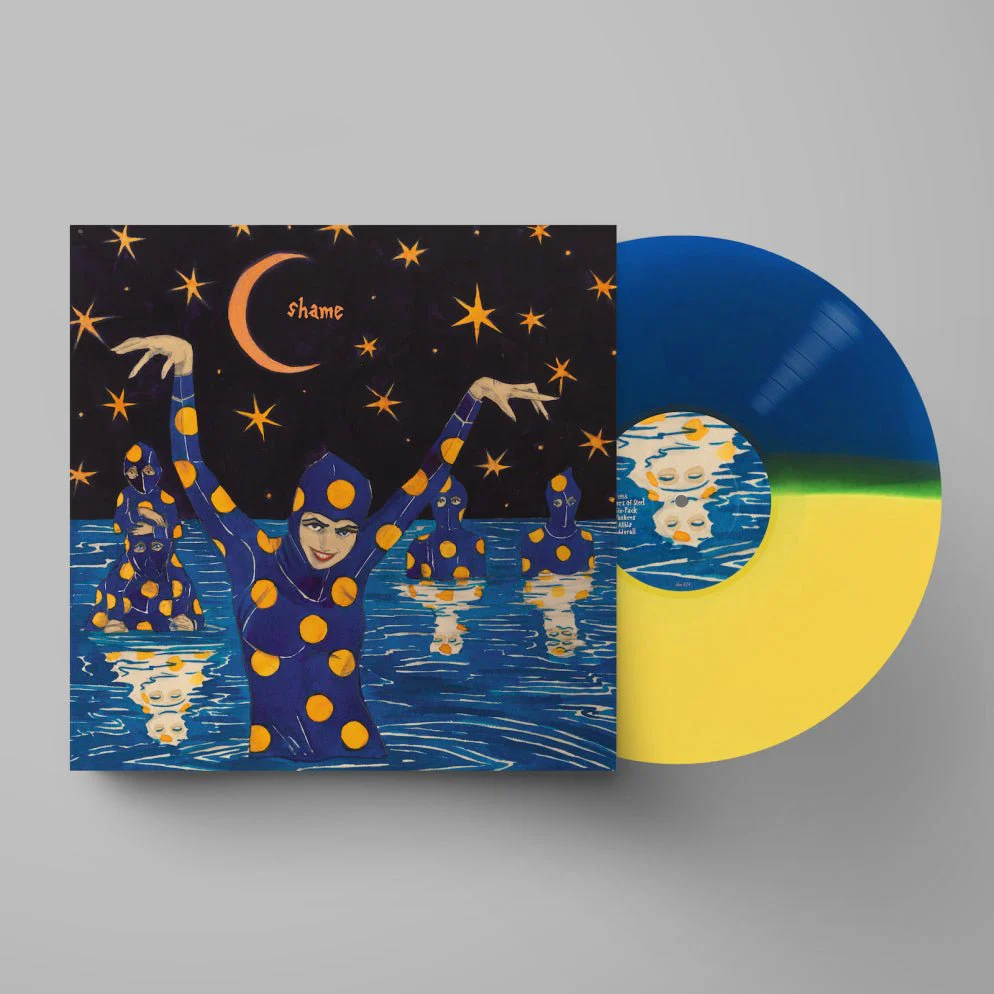
Food for Worms
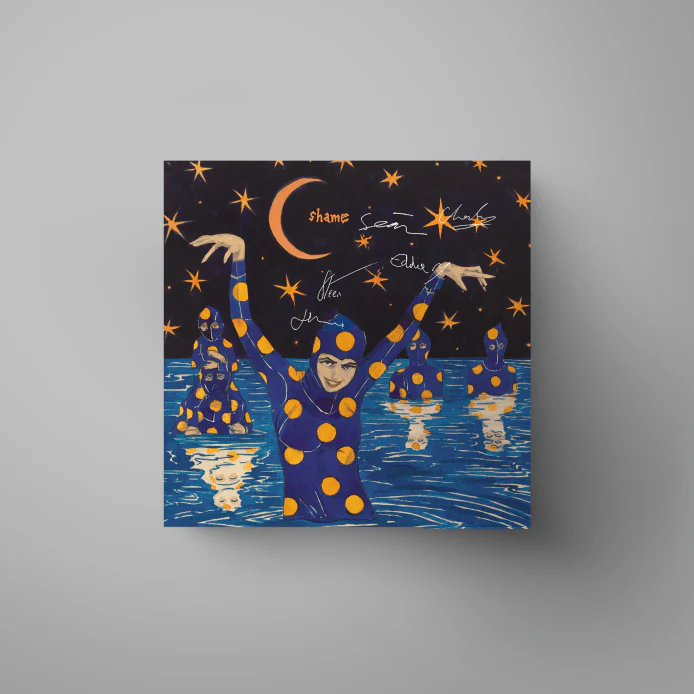
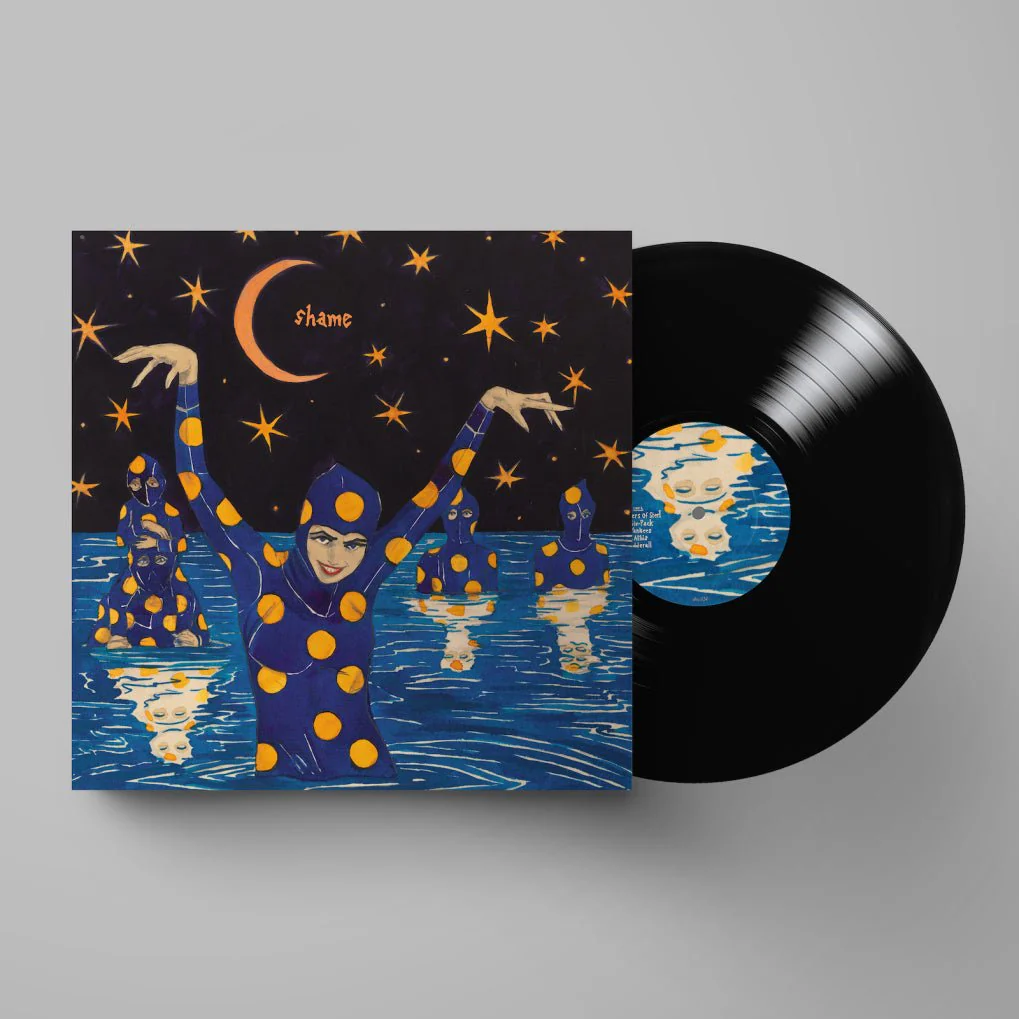
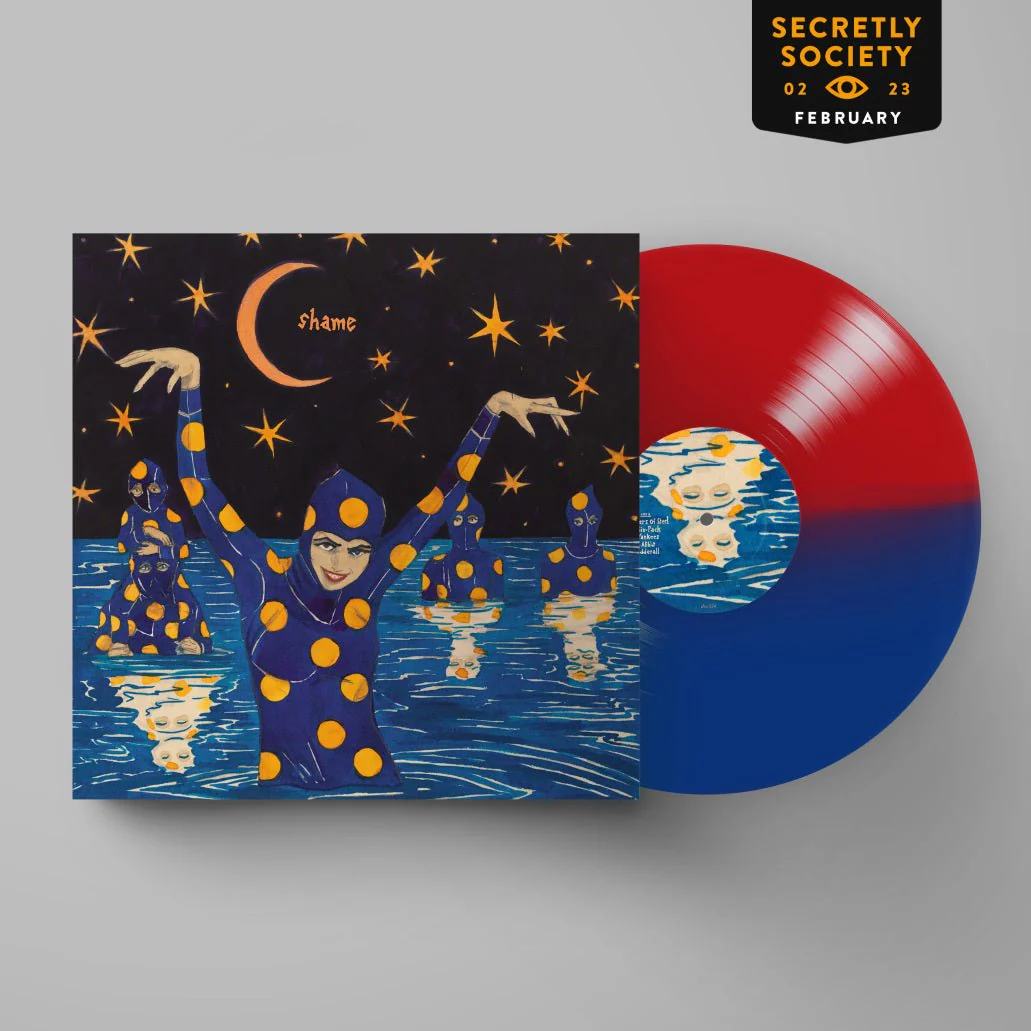
Limited Edition Half Blue/ Half Yellow Vinyl and Half Blue/Half Yellow Vinyl + 7" bundle comes with Signed Print, while supplies last.
shame were tourists in their own adolescence - and nothing was quite like the postcard. The freefall of their early twenties, in all its delight and disaster, was tangled up in being hailed one of post-punk’s greatest hopes. In 2018, they took their incendiary debut album Songs of Praise for a cross-continental joyride for almost 350 relentless nights. They tried to bite off more than they could chew, just to prove their teeth were sharp enough – but eventually, you’ve got to learn to spit it out. Then came the hangover. shame’s frontman, Charlie Steen, suffered a series of panic attacks which led to the tour’s cancellation. For the first time, since being plucked from the stage of The Windmill and catapulted into notoriety, shame were confronted with who they’d become on the other side of it. This era, of being forced to endure reality and the terror that comes with your own company, would form shame’s second album, 2021’s Drunk Tank Pink, the band’s reinvention.
If Songs of Praise was fuelled by pint-sloshing teenage vitriol, then Drunk Tank Pink delved into a different kind of intensity. Wading into uncharted musical waters, emboldened by their wit and earned cynicism, they created something with the abandon of a band who had nothing to lose. Having forced their way through their second album’s identity crisis, they arrive, finally, at a place of hard-won maturity. Enter: Food for Worms, which Steen declares to be “the Lamborghini of shame records.”
For the first time, the band are not delving inwards, but seeking to capture the world around them. “I don’t think you can be in your own head forever,” says Steen. A conversation after one of their gigs with a friend prompted a stray thought that he held onto: “It’s weird, isn’t it? Popular music is always about love, heartbreak, or yourself. There isn’t much about your mates.” In many ways, the album is an ode to friendship, and a documentation of the dynamic that only five people who have grown up together - and grown so close, against all odds - can share.
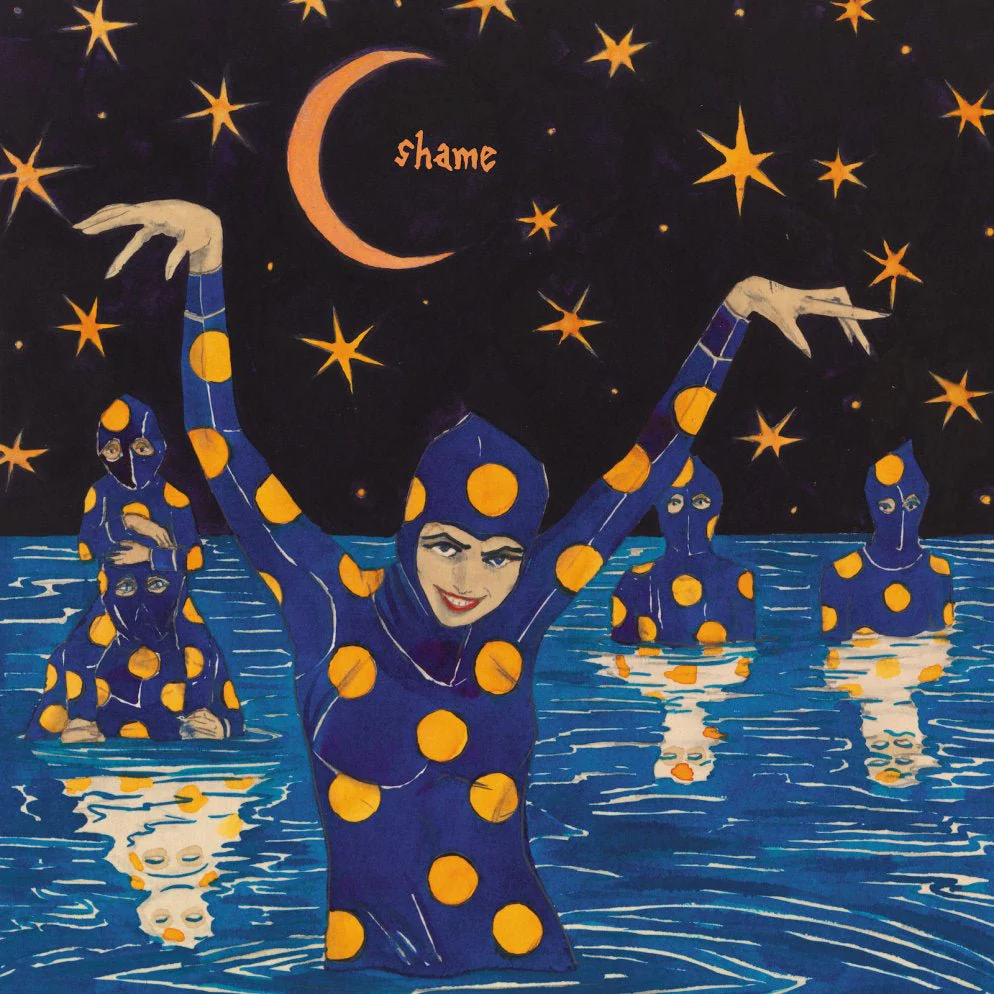
The title, Food for Worms, takes on different meanings when considered with the ten vignettes the band has painted for you across the record. That spirit of interpretation, to see yourself reflected within it, is conveyed through the cover art. Designed by acclaimed artist Marcel Dzama, whose style evokes dark fairy tales and surrealism, it’s suggestive of what’s left unsaid, what lies beneath the surface.
On the one hand, Food for Worms calls to mind a certain morbidity, but on the other, it’s a celebration of life; the way that, in the end, we need each other. It also strikes at the core of shame itself. Since the beginning, the band has been in the business of finding the light in uncomfortable contradictions: Steen always makes a point of taking his top off during performances as a way of tackling his body weight insecurities. Through sheer defiance, they play their vulnerabilities as strengths.
Reconnecting with that ethos is what hotwired the band into making the album after a false start during the pandemic. Without pressure or an end goal - just a long expanse of time - nothing would hold. Their management then presented them with a challenge: in just under three weeks, shame would play two shows at The Windmill where they would be expected to debut two sets of entirely new songs.
This opportunity meant that the band returned the same ideology which propelled them to these heights in the first place: the love of playing live, on their own terms, fed by their audience. Thus, Food for Worms careened and crashed into life faster than anything they’d created before: a weapons-grade cocktail that captured all the gristle, fragility and carnal physicality that earned shame their merits.
It was only right that shame would record the album entirely live for the first time. The band recorded Food for Worms while playing festivals all over Europe, invigorated by the strength of the reaction their new material was met with. That live energy, what it’s like to witness shame in their element, is captured perfectly on record - like lightning in a bottle.
They called upon renowned producer Flood (Nick Cave, U2, Foals) to execute their vision. Recording each track live meant a kind of surrender: here, the rough edges give the album its texture; the mistakes are more interesting than perfection. In a way, it harks back to the title itself and the way that with this record, the band are embracing frailty and by doing so, are tapping into a new source of bravery.
It also marks a sonic departure from anything they’ve done before. shame have abandoned their post-punk beginnings for far more eclectic influences, drawing from the tense atmospherics of Merchandise, the sharp yet uncomplicated lyrical observations of Lou Reed and the more melodic works of 90s German band, Blumfeld.
In the past, their music had been almost clinically assembled, with the vocals and the band existing as two distinct layers. But Food for Worms, there has never been such an immediate sense of togetherness - and more than that, it was fun. Everyone chipped in on vocals; they made the unifying choice to sing, rather than the solitude that comes with a shout. Roles were not so fiercely defined, with Steen taking command of the bass guitar for the anthemic “Adderall”, devising a simple progression that bassist Josh Finerty would never dream of, pushing the album into new, unexpected places.
“Adderall” staggers, feeling the weight of its own bones, evoking a certain desperation that comes with dragging yourself through an internal fog. Steen explains: “‘Adderall’ is the observation of a person reliant on prescription drugs. These pills shift their mental and physical state and alter their behaviour; it’s about how this affects them and those around them. It’s a song of compassion, frustration and the acceptance of change. It’s partly coming to terms with the fact that sometimes your help and love can’t cure those around you but, as much as it causes exasperation, you still won’t ever stop trying to help.”
The album opens with “Fingers of Steel”, which is heralded with an airy piano section that plunges into nosebleed-inducing guitars like a mutant orchestra; it was completely transformed from its folk-indebted beginnings. It delves into the cyclical nature of friendship, which the title invites you to consider. “‘Fingers of Steel’ is about helping a mate and the frustrations that come with it,” shares Steen. “It’s coming to terms with the fact that people can’t be who you want them to be and sometimes there isn’t anything you can do to help, it’s their own thing they have to work out for themselves and you have to accept that.”
But it wouldn’t be shame if there wasn’t a bit of theatrical flair, signed off with a smirk. “Six Pack”, with its psychedelic wah-wah grooves and frenetic guitarwork, sees Steen act as your spirit guide into a room where, within those four walls, your wildest dreams come true: “Now you’ve got Pamela Anderson reading you a bedtime story / And every scratch card is a fucking winner!” he howls. The song is a product of lockdown-induced cabin fever, and the absurd places our mind can wander when we are confined. It’s an anthem for newfound freedom: “You’ve done time behind bars, and now you’re making time in front of them,” Steen sings, with a showman’s grandeur. It’s time to make up for everything you’ve lost or wasted - and shame wants it all.
Food for Worms also sees Steen deliver one of his greatest vocal performances which came from learning to lean into the vulnerabilities his lyrics portray, rather than deflecting them. “Orchid”, opens with the easy amble of an acoustic guitar, a different sound for the band which required careful consideration for how his voice would adapt to it. His vocal teacher, Rebecca Phillips, encouraged him to approach it unflinchingly. He recalls her telling him: “Anything that you’re singing is obviously personal, but a very male tendency is to detach from it and think of the melody, instead of what you’re saying.”
It was this new technique that allowed shame to embrace the songs that dealt with a deeply personal subject: fear for a friend’s mental well-being. Steen’s voice paces with sleepless worry, guilt, frustration – and absolute tenderness. Closing track “All the People”, a great musical swell of brotherly love, haunts the mind the lingering words penned by guitarist Sean Coyle-Smith: “All the people that you’re gonna meet / Don’t you throw it all away / Because you can’t love yourself.” With that weight, there is a lightness to the song which captures the spirit of Food for Worms and all the thoughts that expression evokes, all that bittersweetness. And even if you can’t put those feelings into words, shame have found them for you.
Select STANDARD FORMATS
From $2.70
Original: $8.99
-70%Food for Worms—
$8.99
$2.70More Images




Food for Worms
Limited Edition Half Blue/ Half Yellow Vinyl and Half Blue/Half Yellow Vinyl + 7" bundle comes with Signed Print, while supplies last.
shame were tourists in their own adolescence - and nothing was quite like the postcard. The freefall of their early twenties, in all its delight and disaster, was tangled up in being hailed one of post-punk’s greatest hopes. In 2018, they took their incendiary debut album Songs of Praise for a cross-continental joyride for almost 350 relentless nights. They tried to bite off more than they could chew, just to prove their teeth were sharp enough – but eventually, you’ve got to learn to spit it out. Then came the hangover. shame’s frontman, Charlie Steen, suffered a series of panic attacks which led to the tour’s cancellation. For the first time, since being plucked from the stage of The Windmill and catapulted into notoriety, shame were confronted with who they’d become on the other side of it. This era, of being forced to endure reality and the terror that comes with your own company, would form shame’s second album, 2021’s Drunk Tank Pink, the band’s reinvention.
If Songs of Praise was fuelled by pint-sloshing teenage vitriol, then Drunk Tank Pink delved into a different kind of intensity. Wading into uncharted musical waters, emboldened by their wit and earned cynicism, they created something with the abandon of a band who had nothing to lose. Having forced their way through their second album’s identity crisis, they arrive, finally, at a place of hard-won maturity. Enter: Food for Worms, which Steen declares to be “the Lamborghini of shame records.”
For the first time, the band are not delving inwards, but seeking to capture the world around them. “I don’t think you can be in your own head forever,” says Steen. A conversation after one of their gigs with a friend prompted a stray thought that he held onto: “It’s weird, isn’t it? Popular music is always about love, heartbreak, or yourself. There isn’t much about your mates.” In many ways, the album is an ode to friendship, and a documentation of the dynamic that only five people who have grown up together - and grown so close, against all odds - can share.
The title, Food for Worms, takes on different meanings when considered with the ten vignettes the band has painted for you across the record. That spirit of interpretation, to see yourself reflected within it, is conveyed through the cover art. Designed by acclaimed artist Marcel Dzama, whose style evokes dark fairy tales and surrealism, it’s suggestive of what’s left unsaid, what lies beneath the surface.
On the one hand, Food for Worms calls to mind a certain morbidity, but on the other, it’s a celebration of life; the way that, in the end, we need each other. It also strikes at the core of shame itself. Since the beginning, the band has been in the business of finding the light in uncomfortable contradictions: Steen always makes a point of taking his top off during performances as a way of tackling his body weight insecurities. Through sheer defiance, they play their vulnerabilities as strengths.
Reconnecting with that ethos is what hotwired the band into making the album after a false start during the pandemic. Without pressure or an end goal - just a long expanse of time - nothing would hold. Their management then presented them with a challenge: in just under three weeks, shame would play two shows at The Windmill where they would be expected to debut two sets of entirely new songs.
This opportunity meant that the band returned the same ideology which propelled them to these heights in the first place: the love of playing live, on their own terms, fed by their audience. Thus, Food for Worms careened and crashed into life faster than anything they’d created before: a weapons-grade cocktail that captured all the gristle, fragility and carnal physicality that earned shame their merits.
It was only right that shame would record the album entirely live for the first time. The band recorded Food for Worms while playing festivals all over Europe, invigorated by the strength of the reaction their new material was met with. That live energy, what it’s like to witness shame in their element, is captured perfectly on record - like lightning in a bottle.
They called upon renowned producer Flood (Nick Cave, U2, Foals) to execute their vision. Recording each track live meant a kind of surrender: here, the rough edges give the album its texture; the mistakes are more interesting than perfection. In a way, it harks back to the title itself and the way that with this record, the band are embracing frailty and by doing so, are tapping into a new source of bravery.
It also marks a sonic departure from anything they’ve done before. shame have abandoned their post-punk beginnings for far more eclectic influences, drawing from the tense atmospherics of Merchandise, the sharp yet uncomplicated lyrical observations of Lou Reed and the more melodic works of 90s German band, Blumfeld.
In the past, their music had been almost clinically assembled, with the vocals and the band existing as two distinct layers. But Food for Worms, there has never been such an immediate sense of togetherness - and more than that, it was fun. Everyone chipped in on vocals; they made the unifying choice to sing, rather than the solitude that comes with a shout. Roles were not so fiercely defined, with Steen taking command of the bass guitar for the anthemic “Adderall”, devising a simple progression that bassist Josh Finerty would never dream of, pushing the album into new, unexpected places.
“Adderall” staggers, feeling the weight of its own bones, evoking a certain desperation that comes with dragging yourself through an internal fog. Steen explains: “‘Adderall’ is the observation of a person reliant on prescription drugs. These pills shift their mental and physical state and alter their behaviour; it’s about how this affects them and those around them. It’s a song of compassion, frustration and the acceptance of change. It’s partly coming to terms with the fact that sometimes your help and love can’t cure those around you but, as much as it causes exasperation, you still won’t ever stop trying to help.”
The album opens with “Fingers of Steel”, which is heralded with an airy piano section that plunges into nosebleed-inducing guitars like a mutant orchestra; it was completely transformed from its folk-indebted beginnings. It delves into the cyclical nature of friendship, which the title invites you to consider. “‘Fingers of Steel’ is about helping a mate and the frustrations that come with it,” shares Steen. “It’s coming to terms with the fact that people can’t be who you want them to be and sometimes there isn’t anything you can do to help, it’s their own thing they have to work out for themselves and you have to accept that.”
But it wouldn’t be shame if there wasn’t a bit of theatrical flair, signed off with a smirk. “Six Pack”, with its psychedelic wah-wah grooves and frenetic guitarwork, sees Steen act as your spirit guide into a room where, within those four walls, your wildest dreams come true: “Now you’ve got Pamela Anderson reading you a bedtime story / And every scratch card is a fucking winner!” he howls. The song is a product of lockdown-induced cabin fever, and the absurd places our mind can wander when we are confined. It’s an anthem for newfound freedom: “You’ve done time behind bars, and now you’re making time in front of them,” Steen sings, with a showman’s grandeur. It’s time to make up for everything you’ve lost or wasted - and shame wants it all.
Food for Worms also sees Steen deliver one of his greatest vocal performances which came from learning to lean into the vulnerabilities his lyrics portray, rather than deflecting them. “Orchid”, opens with the easy amble of an acoustic guitar, a different sound for the band which required careful consideration for how his voice would adapt to it. His vocal teacher, Rebecca Phillips, encouraged him to approach it unflinchingly. He recalls her telling him: “Anything that you’re singing is obviously personal, but a very male tendency is to detach from it and think of the melody, instead of what you’re saying.”
It was this new technique that allowed shame to embrace the songs that dealt with a deeply personal subject: fear for a friend’s mental well-being. Steen’s voice paces with sleepless worry, guilt, frustration – and absolute tenderness. Closing track “All the People”, a great musical swell of brotherly love, haunts the mind the lingering words penned by guitarist Sean Coyle-Smith: “All the people that you’re gonna meet / Don’t you throw it all away / Because you can’t love yourself.” With that weight, there is a lightness to the song which captures the spirit of Food for Worms and all the thoughts that expression evokes, all that bittersweetness. And even if you can’t put those feelings into words, shame have found them for you.
Product Information
Product Information
Shipping & Returns
Shipping & Returns
Description
Limited Edition Half Blue/ Half Yellow Vinyl and Half Blue/Half Yellow Vinyl + 7" bundle comes with Signed Print, while supplies last.
shame were tourists in their own adolescence - and nothing was quite like the postcard. The freefall of their early twenties, in all its delight and disaster, was tangled up in being hailed one of post-punk’s greatest hopes. In 2018, they took their incendiary debut album Songs of Praise for a cross-continental joyride for almost 350 relentless nights. They tried to bite off more than they could chew, just to prove their teeth were sharp enough – but eventually, you’ve got to learn to spit it out. Then came the hangover. shame’s frontman, Charlie Steen, suffered a series of panic attacks which led to the tour’s cancellation. For the first time, since being plucked from the stage of The Windmill and catapulted into notoriety, shame were confronted with who they’d become on the other side of it. This era, of being forced to endure reality and the terror that comes with your own company, would form shame’s second album, 2021’s Drunk Tank Pink, the band’s reinvention.
If Songs of Praise was fuelled by pint-sloshing teenage vitriol, then Drunk Tank Pink delved into a different kind of intensity. Wading into uncharted musical waters, emboldened by their wit and earned cynicism, they created something with the abandon of a band who had nothing to lose. Having forced their way through their second album’s identity crisis, they arrive, finally, at a place of hard-won maturity. Enter: Food for Worms, which Steen declares to be “the Lamborghini of shame records.”
For the first time, the band are not delving inwards, but seeking to capture the world around them. “I don’t think you can be in your own head forever,” says Steen. A conversation after one of their gigs with a friend prompted a stray thought that he held onto: “It’s weird, isn’t it? Popular music is always about love, heartbreak, or yourself. There isn’t much about your mates.” In many ways, the album is an ode to friendship, and a documentation of the dynamic that only five people who have grown up together - and grown so close, against all odds - can share.
The title, Food for Worms, takes on different meanings when considered with the ten vignettes the band has painted for you across the record. That spirit of interpretation, to see yourself reflected within it, is conveyed through the cover art. Designed by acclaimed artist Marcel Dzama, whose style evokes dark fairy tales and surrealism, it’s suggestive of what’s left unsaid, what lies beneath the surface.
On the one hand, Food for Worms calls to mind a certain morbidity, but on the other, it’s a celebration of life; the way that, in the end, we need each other. It also strikes at the core of shame itself. Since the beginning, the band has been in the business of finding the light in uncomfortable contradictions: Steen always makes a point of taking his top off during performances as a way of tackling his body weight insecurities. Through sheer defiance, they play their vulnerabilities as strengths.
Reconnecting with that ethos is what hotwired the band into making the album after a false start during the pandemic. Without pressure or an end goal - just a long expanse of time - nothing would hold. Their management then presented them with a challenge: in just under three weeks, shame would play two shows at The Windmill where they would be expected to debut two sets of entirely new songs.
This opportunity meant that the band returned the same ideology which propelled them to these heights in the first place: the love of playing live, on their own terms, fed by their audience. Thus, Food for Worms careened and crashed into life faster than anything they’d created before: a weapons-grade cocktail that captured all the gristle, fragility and carnal physicality that earned shame their merits.
It was only right that shame would record the album entirely live for the first time. The band recorded Food for Worms while playing festivals all over Europe, invigorated by the strength of the reaction their new material was met with. That live energy, what it’s like to witness shame in their element, is captured perfectly on record - like lightning in a bottle.
They called upon renowned producer Flood (Nick Cave, U2, Foals) to execute their vision. Recording each track live meant a kind of surrender: here, the rough edges give the album its texture; the mistakes are more interesting than perfection. In a way, it harks back to the title itself and the way that with this record, the band are embracing frailty and by doing so, are tapping into a new source of bravery.
It also marks a sonic departure from anything they’ve done before. shame have abandoned their post-punk beginnings for far more eclectic influences, drawing from the tense atmospherics of Merchandise, the sharp yet uncomplicated lyrical observations of Lou Reed and the more melodic works of 90s German band, Blumfeld.
In the past, their music had been almost clinically assembled, with the vocals and the band existing as two distinct layers. But Food for Worms, there has never been such an immediate sense of togetherness - and more than that, it was fun. Everyone chipped in on vocals; they made the unifying choice to sing, rather than the solitude that comes with a shout. Roles were not so fiercely defined, with Steen taking command of the bass guitar for the anthemic “Adderall”, devising a simple progression that bassist Josh Finerty would never dream of, pushing the album into new, unexpected places.
“Adderall” staggers, feeling the weight of its own bones, evoking a certain desperation that comes with dragging yourself through an internal fog. Steen explains: “‘Adderall’ is the observation of a person reliant on prescription drugs. These pills shift their mental and physical state and alter their behaviour; it’s about how this affects them and those around them. It’s a song of compassion, frustration and the acceptance of change. It’s partly coming to terms with the fact that sometimes your help and love can’t cure those around you but, as much as it causes exasperation, you still won’t ever stop trying to help.”
The album opens with “Fingers of Steel”, which is heralded with an airy piano section that plunges into nosebleed-inducing guitars like a mutant orchestra; it was completely transformed from its folk-indebted beginnings. It delves into the cyclical nature of friendship, which the title invites you to consider. “‘Fingers of Steel’ is about helping a mate and the frustrations that come with it,” shares Steen. “It’s coming to terms with the fact that people can’t be who you want them to be and sometimes there isn’t anything you can do to help, it’s their own thing they have to work out for themselves and you have to accept that.”
But it wouldn’t be shame if there wasn’t a bit of theatrical flair, signed off with a smirk. “Six Pack”, with its psychedelic wah-wah grooves and frenetic guitarwork, sees Steen act as your spirit guide into a room where, within those four walls, your wildest dreams come true: “Now you’ve got Pamela Anderson reading you a bedtime story / And every scratch card is a fucking winner!” he howls. The song is a product of lockdown-induced cabin fever, and the absurd places our mind can wander when we are confined. It’s an anthem for newfound freedom: “You’ve done time behind bars, and now you’re making time in front of them,” Steen sings, with a showman’s grandeur. It’s time to make up for everything you’ve lost or wasted - and shame wants it all.
Food for Worms also sees Steen deliver one of his greatest vocal performances which came from learning to lean into the vulnerabilities his lyrics portray, rather than deflecting them. “Orchid”, opens with the easy amble of an acoustic guitar, a different sound for the band which required careful consideration for how his voice would adapt to it. His vocal teacher, Rebecca Phillips, encouraged him to approach it unflinchingly. He recalls her telling him: “Anything that you’re singing is obviously personal, but a very male tendency is to detach from it and think of the melody, instead of what you’re saying.”
It was this new technique that allowed shame to embrace the songs that dealt with a deeply personal subject: fear for a friend’s mental well-being. Steen’s voice paces with sleepless worry, guilt, frustration – and absolute tenderness. Closing track “All the People”, a great musical swell of brotherly love, haunts the mind the lingering words penned by guitarist Sean Coyle-Smith: “All the people that you’re gonna meet / Don’t you throw it all away / Because you can’t love yourself.” With that weight, there is a lightness to the song which captures the spirit of Food for Worms and all the thoughts that expression evokes, all that bittersweetness. And even if you can’t put those feelings into words, shame have found them for you.