Our Two Skins
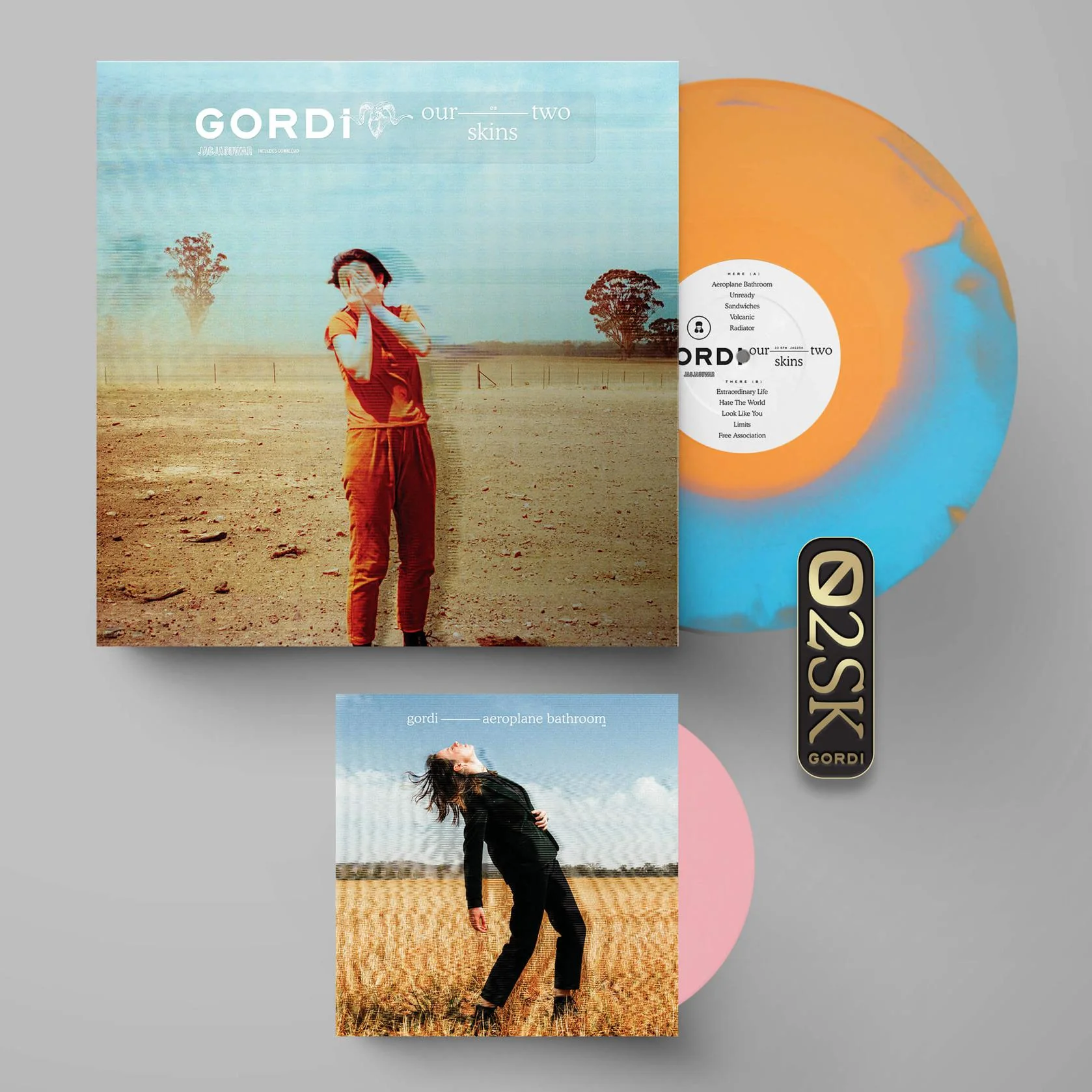
Written in 20 anxious minutes during a lonely plane-ride to an isolated six weeks in Europe, Sophie Payten – the Australian musician known as Gordi – penned “Aeroplane Bathroom,” the Our Two Skins opening track.
"It's like all the adrenaline of the last two months just dropped away and I had a nervous breakdown,“ says Payten, “thinking about all these big changes and entering a relationship with a woman. I was seeing my life that I thought was evolving in one direction is now evolving in this other direction."
The song and record open with a question: "Do you see yourself unravelling?" Our Two Skins, Gordi’s sophomore full-length album, chronicles the intense and impossible time Payten spent renegotiating who she is and how she fits in the world, particularly against the backdrop of Australia’s marriage equality vote – something that previously had not personally impacted Payten – and her Catholic upbringing. “It was a devastating way to fall in love with somebody,” she reflects.
Payten was eager to bottle the isolation and emptiness she felt during this period of rediscovery, and the remoteness of Canowindra, the tiny town where her family has lived for over a century, proved the right location. She called upon her friends Chris Messina (Bon Iver, Bruce Hornsby, Big Red Machine, The Staves) & Zach Hanson (Bon Iver, Hand Habits, Tallest Man on Earth, Low, Waxahatchee) to help her achieve this sonic goal. There was no phone reception or wi-fi — just an outhouse located in a nearby shearing shed. Payten, Hanson and Messina each selected their favorite five instruments and studio tools, and restricted themselves to only those resources while making Our Two Skins. "The idea was about cutting ourselves off from all things, including choice, and forcing us to be a lot more minimalist in the way that we can create stuff,” Payten says.
"A big theme of the record is: there's nothing to hide behind," Payten continues. "We didn't have all the bells and whistles. You’re just standing there, with your hands in your pockets going: this is me. This is it. This is all I have."
Original: $14.99
-70%$14.99
$4.50More Images


Our Two Skins
Written in 20 anxious minutes during a lonely plane-ride to an isolated six weeks in Europe, Sophie Payten – the Australian musician known as Gordi – penned “Aeroplane Bathroom,” the Our Two Skins opening track.
"It's like all the adrenaline of the last two months just dropped away and I had a nervous breakdown,“ says Payten, “thinking about all these big changes and entering a relationship with a woman. I was seeing my life that I thought was evolving in one direction is now evolving in this other direction."
The song and record open with a question: "Do you see yourself unravelling?" Our Two Skins, Gordi’s sophomore full-length album, chronicles the intense and impossible time Payten spent renegotiating who she is and how she fits in the world, particularly against the backdrop of Australia’s marriage equality vote – something that previously had not personally impacted Payten – and her Catholic upbringing. “It was a devastating way to fall in love with somebody,” she reflects.
Payten was eager to bottle the isolation and emptiness she felt during this period of rediscovery, and the remoteness of Canowindra, the tiny town where her family has lived for over a century, proved the right location. She called upon her friends Chris Messina (Bon Iver, Bruce Hornsby, Big Red Machine, The Staves) & Zach Hanson (Bon Iver, Hand Habits, Tallest Man on Earth, Low, Waxahatchee) to help her achieve this sonic goal. There was no phone reception or wi-fi — just an outhouse located in a nearby shearing shed. Payten, Hanson and Messina each selected their favorite five instruments and studio tools, and restricted themselves to only those resources while making Our Two Skins. "The idea was about cutting ourselves off from all things, including choice, and forcing us to be a lot more minimalist in the way that we can create stuff,” Payten says.
"A big theme of the record is: there's nothing to hide behind," Payten continues. "We didn't have all the bells and whistles. You’re just standing there, with your hands in your pockets going: this is me. This is it. This is all I have."
Product Information
Product Information
Shipping & Returns
Shipping & Returns
Description
Written in 20 anxious minutes during a lonely plane-ride to an isolated six weeks in Europe, Sophie Payten – the Australian musician known as Gordi – penned “Aeroplane Bathroom,” the Our Two Skins opening track.
"It's like all the adrenaline of the last two months just dropped away and I had a nervous breakdown,“ says Payten, “thinking about all these big changes and entering a relationship with a woman. I was seeing my life that I thought was evolving in one direction is now evolving in this other direction."
The song and record open with a question: "Do you see yourself unravelling?" Our Two Skins, Gordi’s sophomore full-length album, chronicles the intense and impossible time Payten spent renegotiating who she is and how she fits in the world, particularly against the backdrop of Australia’s marriage equality vote – something that previously had not personally impacted Payten – and her Catholic upbringing. “It was a devastating way to fall in love with somebody,” she reflects.
Payten was eager to bottle the isolation and emptiness she felt during this period of rediscovery, and the remoteness of Canowindra, the tiny town where her family has lived for over a century, proved the right location. She called upon her friends Chris Messina (Bon Iver, Bruce Hornsby, Big Red Machine, The Staves) & Zach Hanson (Bon Iver, Hand Habits, Tallest Man on Earth, Low, Waxahatchee) to help her achieve this sonic goal. There was no phone reception or wi-fi — just an outhouse located in a nearby shearing shed. Payten, Hanson and Messina each selected their favorite five instruments and studio tools, and restricted themselves to only those resources while making Our Two Skins. "The idea was about cutting ourselves off from all things, including choice, and forcing us to be a lot more minimalist in the way that we can create stuff,” Payten says.
"A big theme of the record is: there's nothing to hide behind," Payten continues. "We didn't have all the bells and whistles. You’re just standing there, with your hands in your pockets going: this is me. This is it. This is all I have."